Port Louis Is a Morning City: Street Food, and the UNESCO Site That Closes at Noon
Updated September 18, 2026 · 6 min read
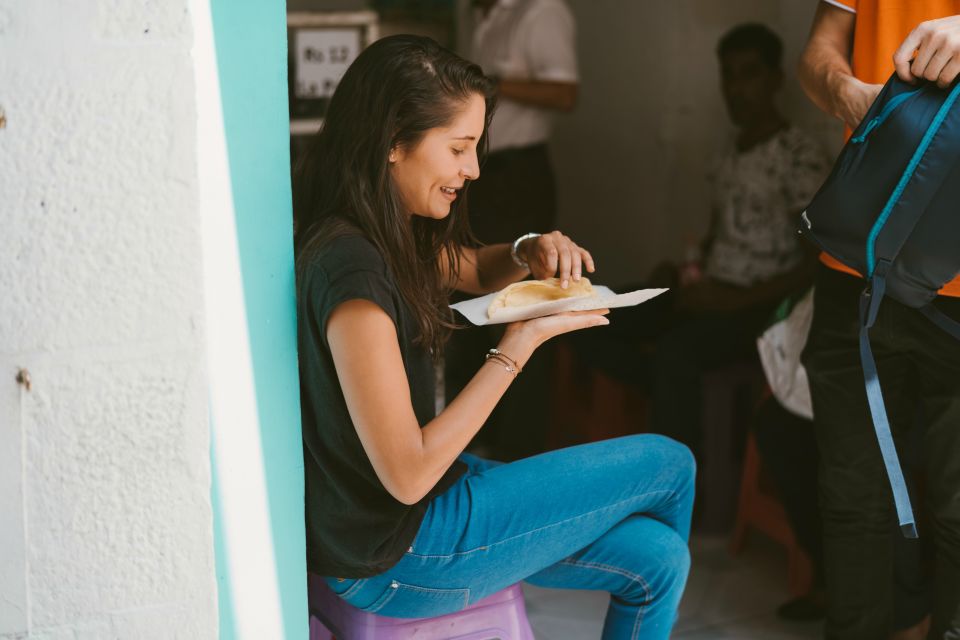
Port Louis is a working harbour capital, wedged between its docks and a ridge of mountains, and it does its business early. Almost every visitor arrives from a beach hotel at eleven, finds a city winding down, and concludes there is nothing there.
The two things that make the trip worth it — the food and the heritage site by the quay — both run on the city’s clock rather than a tourist one.
Aapravasi Ghat: free, an hour, and closed on Sundays
Aapravasi Ghat on Quay Street is the remains of an immigration depot built in 1849. It was inscribed on the UNESCO World Heritage List in 2006 under criterion (vi), and the reason is not the architecture. It is what happened here.
In 1834 the British government chose Mauritius for what it called “the great experiment”: the use of indentured rather than slave labour. Between 1834 and 1920, almost half a million indentured labourers arrived in Mauritius from India — to work the sugar plantations of Mauritius, or to be transshipped onward to Réunion, Australia, southern and eastern Africa and the Caribbean. The surviving site is 1,640 square metres. UNESCO’s citation calls the buildings here among the earliest explicit manifestations of what became a global economic system, and one of the greatest migrations in history.
The Trust Fund publishes exactly what a visit involves:
| Monday to Friday | 9am – 4pm |
| Saturday | 9am – noon |
| Sunday and public holidays | closed |
| 24 and 31 December | closes at noon |
| Admission | free of charge |
| How long | about 1 hour — 30 to 40 minutes in the interpretation centre, 20 minutes on the site |
Guided visits exist but only on prior booking and subject to availability, so a walk-in is a self-guided visit. The Trust Fund states that the World Heritage Site is accessible by wheelchair, that all galleries and the main area of the Beekrumsing Ramlallah Interpretation Centre are accessible, and that there are accessible toilets — worth confirming by phone before travelling, as with any access question.
There is no visitor parking. The centre says so plainly and points you to the Granary or to Le Caudan Waterfront, both a short walk away.
The food is the reason to be there at nine
Mauritian street food is the island’s most direct expression of the same history: Indian flatbreads, Chinese noodles, Creole sauces, all sold from the same few streets.
Dholl puri — a thin flatbread filled with ground yellow split peas, served in twos with bean curry and chutney — is the one to try first, and it is a breakfast and lunch item, not an evening one. Vendors sell out and go home; this is not a night-market city.
Two guided routes carry almost identical ratings and a €11.75 gap:
| Tour | Duration | Price | Stars | Reviews |
|---|---|---|---|---|
| Street food and city tour | 3.5 hours | €38.25 | 4.8 | 499 |
| Port Louis street food and city tour | 3 hours | €50.00 | 4.8 | 546 |
Half an hour longer for €11.75 less is the kind of comparison that looks like a mistake and is not — they are two listings over similar ground. Both meet at the same spot: in front of the casino, opposite Café LUX at the Caudan Waterfront. Both walk; the shorter of the two covers just under 4 km and publishes its run-through to the minute — seven tastings, three photo stops and 25 minutes in the Central Market. Neither listing publishes its starting times; those appear only in the booking calendar. And both are the efficient answer to the real problem with eating here independently: not finding the food, but knowing which stall to trust and what to ask for.
If you would rather have the city as part of a longer day, a private city tour with the sugar museum runs seven and a half hours at €97.20, and a private northern tour taking in the gardens and markets is €110 with 4.8 stars from 588 reviews. Both end well away from Port Louis, which is the point of them.
The Central Market, and a number we are not going to print
The Central Market is two buildings and a covered lane between them: fruit and vegetables on one side, crafts and textiles on the other, food stalls throughout.
We cannot give you its opening hours. The times published by travel sites contradict each other — one gives 5.30am to 11.30pm on a Sunday, another 5am to 11.30am on the same day — and we could not find a figure from the market or the city itself. What is consistent across every account is that trade is heaviest in the morning and thins out through the afternoon. Treat it as a morning market and you will not be disappointed by it; plan a 4pm visit on the strength of a number from a listings site and you may be.
The same applies to the mosque, the Chinatown arches and the Champ de Mars racecourse: this is a city where things are open because people are working, and it empties when they stop.
How to build the day
Start at the Ghat, at nine. It is free, it takes an hour, and it is the one thing here that explains the island — every other site on Mauritius is easier to understand after it.
Eat between ten and one, which is when the food is at its best and the stalls have not yet sold out.
Do not plan a Sunday. The Ghat is closed, and so is most of what surrounds it.
And do not plan Port Louis and a boat on the same day. The capital is on the other side of the island from the east-coast quays, and the catamarans leave Trou d’Eau Douce at half past nine; the two do not fit into one morning. Our culture and food pages hold 80 offers from €10, and the nature and hiking side of the island — including the inland sites and their opening hours — is a separate day again.